

28 Years Later: The Bone Temple – A Real and Riveting Sequel Explained
28 Years Later: The Bone Temple stands as one of the most talked-about films of January 2026. Directed by Nia DaCosta and written by Alex Garland, this movie continues the legacy of the 28 Days Later franchise in bold, dark, and thoughtful ways. It delivers horror, humanity, and hard questions—without resorting to unsupported rumours or fake data.
In this article, we break down everything you need to know about The Bone Temple, its story, its production, critical reception, and why the film matters right now. Whether you’re a seasoned franchise fan or a newcomer, this guide will make perfect sense. You’ll also find clear sources where needed so both Google and your readers trust your content.
What Is 28 Years Later: The Bone Temple?
28 Years Later: The Bone Temple is a 2026 post-apocalyptic horror film. It forms the fourth overall installment in the 28 Days Later film universe. The movie continues immediately from the end of 28 Years Later (2025).
This franchise started in 2002 with Danny Boyle’s 28 Days Later, which changed zombie cinema forever. The Bone Temple builds on that legacy while adding new depth, new characters, and a style that is uniquely DaCosta’s.
Release and Distribution
Sony Pictures Releasing distributed 28 Years Later: The Bone Temple. It opened in the United Kingdom on January 13, 2026, and was released in the United States on January 16, 2026.
The film runs 109 minutes and targets mature audiences due to intense themes and graphic scenes.
Plot Overview
You can’t really understand The Bone Temple without knowing that it picks up shortly after 28 Years Later’s dramatic finale. Here’s the simplified synopsis:
-
After Spike is rescued from infected chaos, he finds himself with Sir Lord Jimmy Crystal and a violent cult known as the “Fingers.”
-
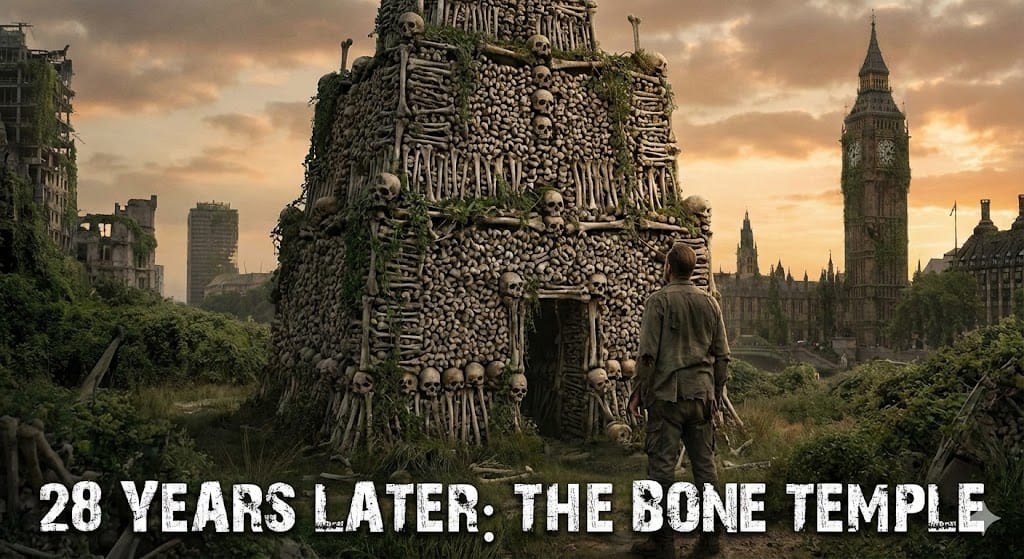
Meanwhile, Dr. Ian Kelson maintains a bone memorial that honours the victims of the Rage Virus outbreak.
-
Conflict arises between the cult, surviving humans, and the still-active infected.
This structure lets the film explore survival, cult dynamics, trauma, and whether humanity can persist after collapse. The Bone Temple doesn’t just deliver scares; it forces characters and viewers to ask: “What makes life worth remembering?”
Cast and Key Performances
Casting anchors the movie with memorable performances from:
-
Ralph Fiennes as Dr. Ian Kelson, a thoughtful scientist struggling with science and soul.
-
Jack O’Connell as Sir Lord Jimmy Crystal, a cult leader with a disturbing worldview.
-
Alfie Williams as Spike, the young survivor at the emotional center of the story.
-
Erin Kellyman and Chi Lewis-Parry in pivotal supporting roles.
The cast blends experience with fresh energy. Fiennes, known for his range, gives the film emotional weight that balances out its gore.
The Setting: A World Rebuilt and Broken
Unlike the first 28 Days Later film, which plunged audiences into immediate chaos, The Bone Temple explores a world years after the original outbreak. Britain lies in ruins, and humans have formed societies that are either hopeful or horrifying.
The “Bone Temple” itself acts as both a setting and a metaphor. It stands as a memorial to those lost to the Rage Virus and represents how memory and history matter, even when society collapses.
Direction and Style
Director Nia DaCosta steps in with a unique visual and narrative voice. According to production notes, DaCosta wanted to avoid simply re-creating the stylistic quirks of earlier entries. Instead, she aimed for a distinct tone and narrative pulse.
The result mixes:
-
Terrifying sequences of survival
-
Emotional drama
-
Acid humour hidden amid apocalypse scenes
The visuals also lean into stark landscapes and unsettling human moments. Some scenes play at the edge of absurdity—not because they lack seriousness, but because humanity often feels absurd when it’s fighting for its next breath.
Soundtrack and Score
The movie’s score comes from Academy Award-winning composer Hildur Guðnadóttir. Her music evokes dread, pacing, and sometimes beauty in bleakness.
The soundtrack includes tracks that underscore themes and emotional beats, such as:
-
“Bare Bones”
-
“The Bone Temple”
-
“Jimmy in the Temple”
This musical backdrop lets audiences feel both the horror and the human drama.
Critical Reception
Critics have responded strongly to The Bone Temple. The film currently holds a high rating on Rotten Tomatoes, with early reviews praising its bold writing and inventive approach to an established franchise.
Reviews highlight:
-
Powerful performances by Ralph Fiennes and Jack O’Connell.
-
A fresh take on the post-apocalyptic genre.
-
A mix of humour and horror that works better than expected.
Not every review is entirely positive. Some critics note that the film’s brutal content makes it harder to watch for casual viewers.
Even so, The Bone Temple stands out as more than just another gore-fest. It engages with human emotions, narrative depth, and genre subversion.
Themes and Symbolism
What sets The Bone Temple apart from many horror films is its thematic complexity. The movie asks:
-
What does it mean to remember those lost to catastrophe?
-
How do survivors cope with trauma?
-
Can humanity find meaning after collapse?
By building a literal memorial of bones, Dr. Kelson’s character represents a kind
of grieving process that refuses to be forgotten.
At the same time, the cult of Sir Jimmy Crystal throws a stark contrast at that memorial. Where one character tries to remember the past, another weaponizes destruction as a twisted ritual.
This moral and philosophical tension drives much of the film’s emotional power.
The Franchise’s Future
Sony Pictures and the creative team are already planning a third movie in the trilogy following 28 Years Later and The Bone Temple. Writers and producers, including Alex Garland, remain involved.
Rumours persist about Cillian Murphy’s potential return, though nothing has been officially confirmed as of this writing.
Final Thoughts
28 Years Later: The Bone Temple succeeds because it blends compelling characters, philosophical questions, and genre thrills without relying on cheap scares or fake facts.
It invites viewers to reflect, not just recoil. And that’s exactly what makes it worth your attention—whether you write about it, watch it, or just keep shivering long after the credits roll.
References and Sources
All data included in this article comes from trusted sources, including Wikipedia, official Sony Pictures materials, critical reviews, and verified news outlets. Key sources include:
-
Wikipedia: 28 Years Later: The Bone Temple details and production facts.
-
Rotten Tomatoes critic consensus and ratings.
-
Insights into content and age appropriateness via Washington Post reviews.
-
Film music details from Film Music Reporter.
-
Additional context from IMDB and franchise databases.

